Text vs. Email Review Requests: Optimizing Feedback for Local Businesses
Discover the advantages and best practices for using text (SMS) and email to collect customer reviews, helping local businesses choose the right strategy to boost their online reputation.
The Crucial Role of Online Reviews
In today's digital landscape, online reviews are more than just feedback; they are a cornerstone of trust and visibility for local businesses. Positive reviews on platforms like Google and Facebook can significantly influence purchasing decisions, improve local search rankings, and build a strong reputation. However, simply providing great service isn't enough; actively requesting reviews is essential to capture and showcase customer satisfaction. The challenge lies in choosing the most effective method to reach customers and encourage them to share their experiences.
Leveraging SMS for Immediate Feedback
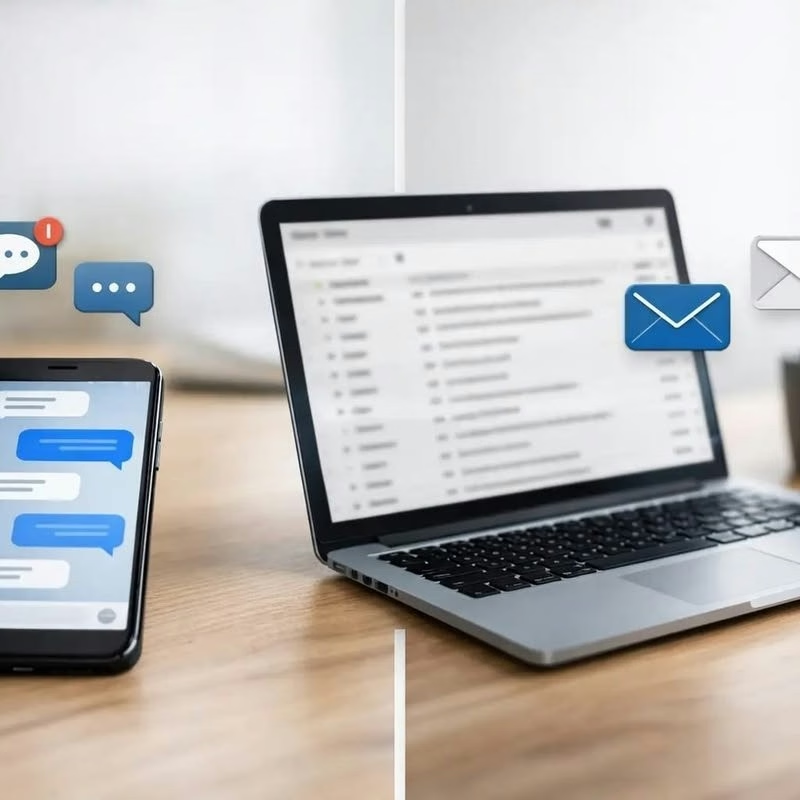
Text message (SMS) review requests offer unparalleled immediacy and high engagement rates. With nearly universal mobile phone usage, SMS messages boast impressive open rates, often within minutes of being sent. This channel is particularly effective for businesses where customer interaction is brief and direct, such as quick-service restaurants, salons, or auto repair shops. Sending a text message shortly after a service is completed can capture the customer's experience while it's still fresh, leading to higher response rates and more authentic feedback. The key is to keep the message concise and include a direct link to the review platform.
The Strategic Advantages of Email Requests
While SMS excels in immediacy, email review requests provide a more comprehensive and flexible approach. Email allows for more detailed messaging, enabling businesses to personalize the request, provide additional context about the service, and even offer multiple review platform options. This channel is ideal for services with longer customer journeys, higher-value transactions, or when a business wants to share more information, such as a thank-you note or a link to their social media. Email campaigns can also be automated to follow up with customers at a strategic point after their purchase or service, ensuring a thoughtful approach to feedback collection.
Understanding Response Rates and Optimal Timing
Both text and email have their unique strengths regarding response rates. SMS typically sees higher open and click-through rates due to its direct nature, often resulting in quicker, though sometimes shorter, reviews. Email, while having slightly lower open rates than SMS, can yield more detailed and thoughtful reviews, especially if the customer is given ample time and a clear call to action. The optimal timing for review requests varies: SMS works best immediately after a positive interaction, while email can be sent a day or two later, allowing the customer to fully experience the product or service. Testing different timings for your specific business can reveal the most effective window.
Crafting Compelling Review Messages
Regardless of the channel, the content of your review request is paramount. Messages should always be polite, appreciative, and clear about the desired action. For SMS, brevity is crucial; a simple 'Thank you for your business! Please share your experience here: [link]' often suffices. For email, you have more room to express gratitude, remind the customer of the service they received, and explain how their feedback helps your business and other potential customers. Always include a direct, easy-to-click link to your preferred review platform (e.g., Google Business Profile, Facebook). Personalization, even a simple 'Hi [Customer Name],' can significantly boost engagement.
When to Choose Each Channel
Deciding between text and email depends on your business model and customer preferences. Use SMS for customers who have just completed a quick service, for those you have a direct mobile number for, or when you need immediate feedback. Opt for email when you have a longer relationship with the customer, want to provide more context, or when the customer's journey involves multiple touchpoints. Consider your customer demographics; younger audiences might prefer text, while others might appreciate a professional email. Ultimately, the best approach is often to understand your customer's preferred communication method.
A Unified Strategy for Maximizing Reviews
For many local businesses, the most effective strategy isn't choosing one channel over the other, but rather integrating both text and email into a comprehensive review collection system. A platform that automates review requests via both SMS and email, like RevuHQ, can streamline this process. By leveraging the strengths of each channel, businesses can reach a wider audience, cater to diverse customer preferences, and significantly increase the volume and quality of their online reviews. This dual-channel approach ensures that no opportunity for valuable feedback is missed, helping businesses build trust and rank higher in local search results.
Article by
Alabama
RevuHQ is an affordable reputation management platform built for local businesses and agencies. Automate review collection via text and email, respond to Google reviews with AI-powered replies, and publish to social, all from one dashboard. A smarter, leaner alternative to Birdeye and Podium at a fraction of the cost. RevuHQ helps businesses rank higher in local search, build trust with AIpowered discovery tools, and turn happy customers into visible, searchable proof. Visit therevuhq(dot)com to get started.