Siding Repair vs. Full Re‑Stucco: Choosing the Right Fix for Your Sacramento Home
Practical guidance for homeowners weighing spot repairs, partial replacement, or a full re‑stucco — how pros diagnose hidden problems, match texture and color, and when a larger project can save money and headaches long term.

Why the right choice matters in Sacramento
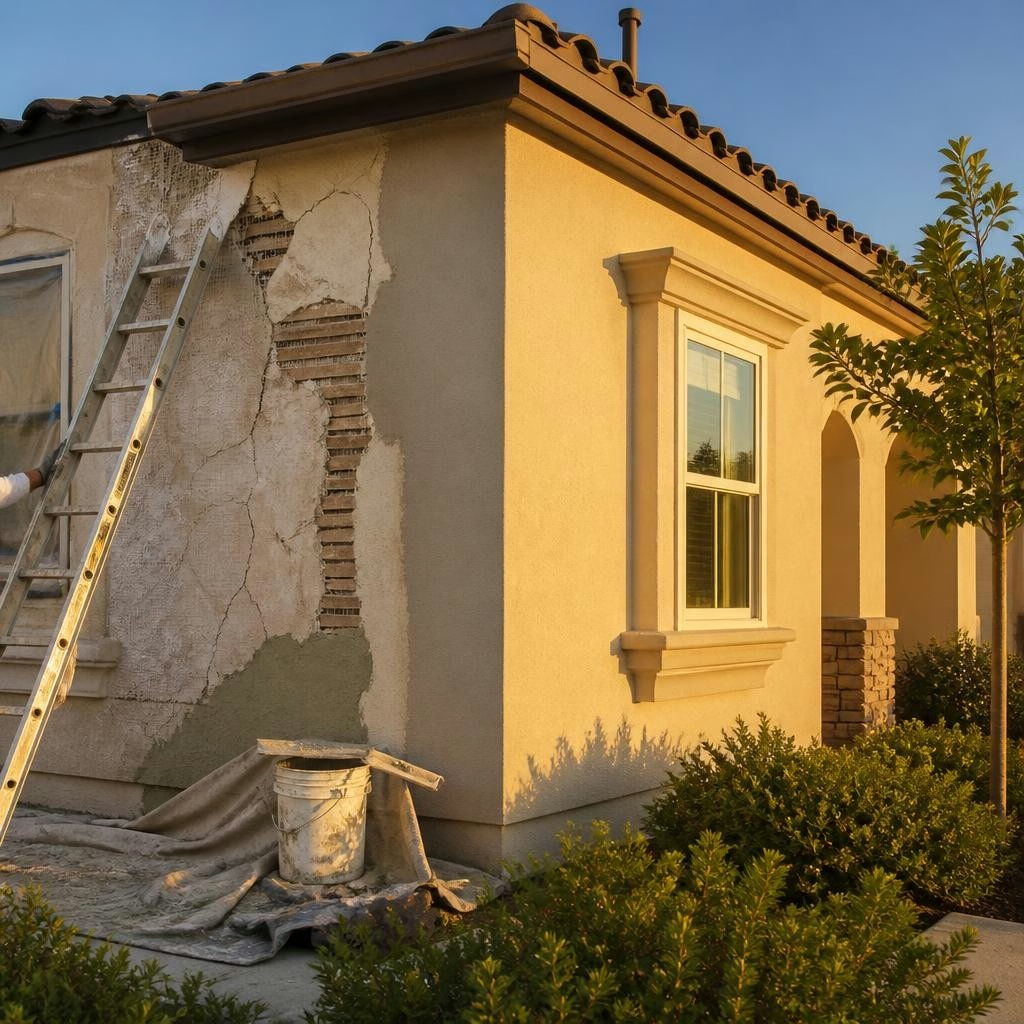
Older homes in the Sacramento area commonly show wear where siding or stucco meets windows, eaves, and foundations. What starts as a small crack or discolored patch can hide water intrusion, dry rot, or failed flashing. Choosing a quick patch when there’s an underlying moisture problem can lead to repeated repairs; conversely, a full re‑stucco may be unnecessary for an isolated issue. This article helps you decide which route is appropriate, what a professional inspection looks for, and how a local contractor handles matching and permitting.
Common signs that point to deeper problems
Look beyond surface cracks. Soft or spongy substrate when you press at the repair area, repeated water stains inside the home, visible mold or efflorescence, bulging or delaminated stucco, and rot around window sills are red flags that water has reached the sheathing or framing. Small hairline cracks or paint failure with no soft substrate often indicate a surface repair will suffice. Noting where damage appears — around windows, roof intersections, or at grade — helps determine whether the issue is local or systemic.
How professionals diagnose what’s behind the damage
A careful contractor will start with a visual inspection, then use nondestructive checks (moisture meters, probing) and, when needed, open a small access hole to inspect the sheathing and framing. One long‑term customer described Caldwell Construction’s approach of limiting demolition to what’s necessary, running water tests to isolate leaks, and offering phased options so the homeowner can compare fixes before committing to a large scope. That combination—narrowing the source, testing, and communicating options—keeps surprises to a minimum.
When spot repairs or partial replacement are the right choice
Spot repairs work well for hairline cracks, small impact damage, or isolated areas where the sheathing and framing are dry and sound. Partial replacement (removing and replacing a few panels or a section of stucco) makes sense when decay or damage is contained to a limited area but requires replacing damaged sheathing or flashing. Benefits include lower upfront cost and faster completion; the tradeoff is the potential for visible patch lines if texture or color cannot be perfectly matched, and the possibility of future repairs if an unseen problem remains.
When a full re‑stucco is the better long‑term investment
Full re‑stucco is usually warranted when damage is widespread, when multiple patches have failed, when substantial dry rot or framing damage exists, or when the existing cladding lacks continuous, modern weather‑resistive barriers. Although a full re‑stucco is a larger upfront project, it lets contractors address flashing, sheathing, insulation, and trim consistently, reducing the risk of recurring leaks and rework. For owners planning to stay in the home, a comprehensive fix can be more cost‑effective over time and improves long‑term durability.
Matching texture, color, permits, and timelines
Matching existing stucco texture and paint is a skilled trade. Small patches can be blended successfully, but color differences often appear until the patch and surrounding areas weather equally; sometimes repainting a larger area is recommended for a uniform look. Full re‑stucco involves multiple coats and curing time, so expect a longer timeline than a patch. Many jurisdictions require permits for extensive exterior work; Caldwell Construction lists permit pulling among its services, which helps keep projects compliant with local building codes and inspections.
Planning your job with a local contractor: what to expect
Start with a detailed estimate that explains scope, materials, and staged options so you can compare spot repair versus partial or full replacement. Ask how the contractor will diagnose moisture sources, protect landscaping, and finish textures and paint. Reviews from local customers indicate that clear communication, respectful crews, and follow‑up are valued—look for a contractor who documents findings, offers phased options when appropriate, and stays reachable during the project. If you suspect water intrusion or see soft substrate, prioritize a diagnostic inspection before choosing a quick patch.
Customer review

Article by
Caldwell Construction
Caldwell Construction Inc. offers a wide range of services to cater to the various needs of our clients. Our team of skilled professionals is equipped to handle any project big or small. We offer kitchen and bathroom remodeling, building additional dwelling units ADU's, interior and exterior painting, drywall installation, roofing, patio and deck building, permit Pulling, tile work, building maintenance and more. We believe in building long-term relationships with our clients based on trust and reliability. When you choose us, you can be confident that your project will be handled with professionalism, expertise, and attention to detail.