Painting Stucco, Siding, and Trim in Sacramento: How to Prevent Peeling, Warping, and Early Failure
Practical guidance for homeowners on preparing and painting stucco, vinyl siding, and exterior trim in Sacramento’s climate—what to fix first, which product types to consider, common mistakes to avoid, and signs of a quality paint job.

Why Sacramento’s climate matters
Sacramento’s Mediterranean climate—hot, sunny summers and cool, wetter winters—creates conditions that can accelerate exterior paint problems if materials and methods aren’t chosen carefully. Strong UV exposure and daily temperature swings cause surfaces to expand and contract; wet winters can trap moisture behind coatings. Those combined stresses are often why poorly executed paint jobs blister, peel, or cause vinyl siding to warp and detach rather than providing long-term protection.
Common causes of exterior paint failure
Failures usually stem from substrate or preparation problems rather than paint alone. Common issues include painting over loose or flaking coatings, trapped moisture in stucco or wall assemblies, unaddressed rot or delaminated siding, wrong primer for the material, and using non-breathable coatings on masonry. Another frequent cause is applying paint in direct midday sun or when the substrate is hot, which prevents proper curing and can lead to early failure.
Key prep steps before painting stucco or siding
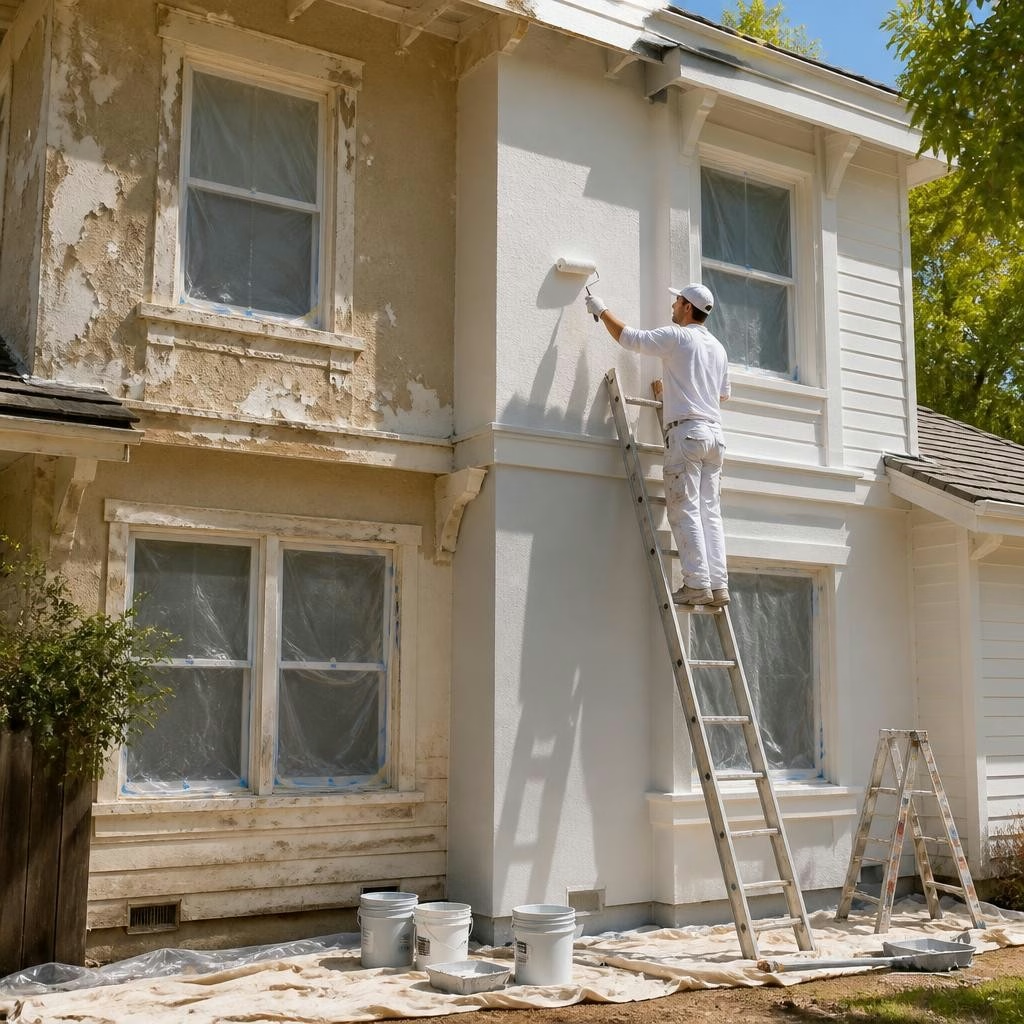
Good long-term results start with thorough prep. That means: inspect and repair the substrate (patch stucco cracks, replace rotten trim), remove failing paint down to sound material, pressure wash to remove dirt and chalk (at safe pressures for stucco), allow full drying time, and ensure flashing and seals are intact. For vinyl siding that has warped after being painted, the correct fix often requires removing or replacing affected pieces rather than simply repainting over them.
Choosing the right products for each surface
Use coatings formulated for the substrate. For stucco and masonry, choose a high-quality, breathable exterior acrylic masonry paint or a recommended elastomeric coating for surfaces with fine cracking. For vinyl siding, choose a UV-stable, exterior acrylic designed for flexible substrates and avoid very dark colors that increase heat absorption and risk warping. For trim and wood, apply an appropriate primer first (for bare wood, knot-sealing, or metal substrates as needed) and finish with a durable exterior acrylic topcoat. Always follow manufacturer guidance for primers and topcoats on each material.
Application best practices to avoid early problems
Apply coatings under suitable weather conditions—cooler parts of the day, and when no rain is expected for the manufacturer’s recommended cure time. Back-roll stucco after spraying so paint fully penetrates the texture; use proper film thickness and allow full dry/recoat windows; caulk joints and transitions with exterior-grade caulk; and avoid painting over materials that must remain flexible with rigid coatings. Finally, inspect and correct any underlying moisture issues before finishing work.
What a quality exterior paint job should look like
A well-done exterior paint job shows even color and texture, tight and flexible sealant joints, no visible drips or sagging, and clean, crisp lines at trim and flashings. Substrate repairs should be blended so patched stucco or replaced siding matches surrounding areas in texture and finish. Professional crews will also protect landscaping and clean up daily. Local customers commonly praise jobs that combine careful prep with attention to detail and tidy work areas.
When to call a contractor and questions to ask
If you see blistering, widespread peeling, warped siding, recurring moisture staining, or large stucco cracks, call a contractor for a thorough inspection rather than attempting a cosmetic repaint. When getting estimates, ask what substrate repairs are included, what primers and topcoats will be used and why, how they handle moisture and flashing issues, and about recoat windows and expected drying times. Ask to see examples of similar local work and confirm the plan for cleanup and protection of your property. Many homeowners find it reassuring when a contractor documents the problem, explains repair steps, and shows before-and-after photos of similar fixes.
Customer review

Article by
Caldwell Construction
Caldwell Construction Inc. offers a wide range of services to cater to the various needs of our clients. Our team of skilled professionals is equipped to handle any project big or small. We offer kitchen and bathroom remodeling, building additional dwelling units ADU's, interior and exterior painting, drywall installation, roofing, patio and deck building, permit Pulling, tile work, building maintenance and more. We believe in building long-term relationships with our clients based on trust and reliability. When you choose us, you can be confident that your project will be handled with professionalism, expertise, and attention to detail.