Emergency Contractor Calls in Sacramento: What to Do When Water Reaches Outlets, Ceilings, or Walls
Practical, step‑by‑step guidance for homeowners in Sacramento on immediate safety actions, what to tell an emergency contractor, and how a coordinated electrician/plumber/contractor team manages urgent water‑and‑electric hazards.
Why quick, calm action matters
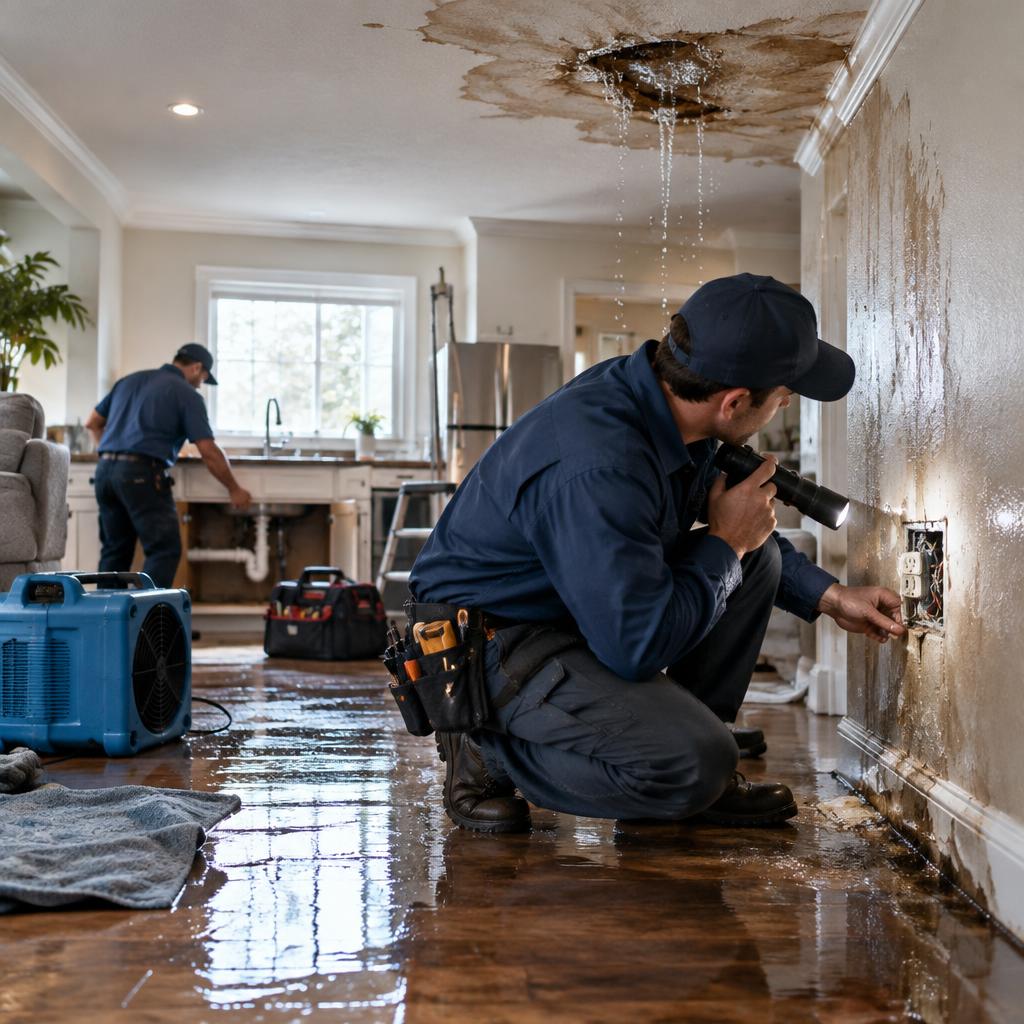
Water near electrical outlets, inside walls, or pooling on ceilings is an urgent safety issue: it risks shock, fire, structural damage, and mold growth. Acting quickly and deliberately reduces danger to people and limits the cost and scope of repairs. This article lays out immediate steps you can take, the information to have ready for an emergency contractor, and how a multi‑trade team coordinates to make the situation safe and start repairs.
Step 1 — Ensure personal safety first
If you see water touching an outlet, switch, or electrical appliance, keep everyone away from the area. Do not touch water‑soaked switches, metal fixtures, or plugged‑in devices. If you can do so safely, unplug devices by pulling the plug (not the cord) from a dry area, or stand on a dry board or rubber‑soled shoes. If anyone shows signs of electric shock, call 911 immediately. When in doubt about live electricity, evacuate the immediate area until a professional assesses the risk.
Step 2 — Reduce electrical risk when safe to do so
If it’s safe and you know where your main breaker is, shut off power to the affected circuit or the whole house to remove the immediate electrical hazard. Labeling your panel in advance makes this much easier. Do not attempt to open outlets, switches, or junction boxes yourself. Once power is off, avoid standing water and keep others clear until a licensed electrician confirms circuits are de‑energized and the area is safe for work.
Step 3 — Stop the water and limit damage
If the leak source is known and you can access it (for example, a burst supply line), shut off the appropriate water valve—under sinks, behind toilets, or the main shutoff to the house. Place buckets under drips, move furniture and electronics out of the wet area, and remove rugs and soaked items that can be relocated safely. Use towels or a wet/dry vacuum to limit standing water, but only after power is shut off or confirmed safe. Photographs of damage help with contractor assessment and insurance claims.
What to have ready for the contractor
When you call an emergency contractor, be prepared to describe: exact location of the water and any electrical involvement (e.g., outlet, breaker tripping), when you first noticed the problem, recent work in that area, visible damage (photos are very helpful), and whether anyone was shocked or had an appliance fail. Note access details (gate codes, pets), and have any appliance/model information available if a unit is involved. Having these details speeds triage and helps the contractor bring the right trades and equipment.
How a coordinated multi‑trade team handles urgent risks
Resolving a leak that affects wiring or living spaces usually requires sequencing: a licensed electrician isolates or de‑energizes circuits and evaluates for damaged wiring; a plumber locates and stops the leak and repairs piping; and a general contractor scopes and secures structural or finish damage. Professional teams protect the home—covering floors, containing dust, and cleaning up afterwards—and communicate next steps. Reviews of local multi‑trade contractors note fast prioritization of emergency calls, crews that protect living spaces, and thorough cleanup once the urgent hazard is addressed.
Next steps after the emergency: drying, repairs, and prevention
After the immediate hazards are handled you’ll typically need moisture mitigation (drying, dehumidification), a trades plan for replacing damaged drywall, outlets, or flooring, and verification that electrical and plumbing repairs meet code. If permits are required for the work, a contractor who pulls permits can streamline inspections and final approvals. Finally, ask the contractor about the cause and simple prevention measures—like checking supply line fittings, keeping attic vents in good repair, or protecting electrical outlets in splash‑prone areas—to reduce the chance of repeat events.
Article by
Caldwell Construction
Caldwell Construction Inc. offers a wide range of services to cater to the various needs of our clients. Our team of skilled professionals is equipped to handle any project big or small. We offer kitchen and bathroom remodeling, building additional dwelling units ADU's, interior and exterior painting, drywall installation, roofing, patio and deck building, permit Pulling, tile work, building maintenance and more. We believe in building long-term relationships with our clients based on trust and reliability. When you choose us, you can be confident that your project will be handled with professionalism, expertise, and attention to detail.